Coffee Cupping ~ Discovering the World’s Best
Coffee Cupping ~ Discovering the World’s Best
Slurp. Slurp. Slurp – the sound your parents probably didn’t want to hear at the dinner table.
Those sounds are integral to Urth Caffé’s decisions about our heirloom, organic coffees at the South Bay Roasting Room each day. “It takes a lot for a coffee to reach the level of ‘Urth Worthy,’” said Shallom Berkman, Urth Co-Founder. “We look for coffee with superb and exceptional flavors – unique and stand-out characteristics.
“Each quality – aroma, body, flavor and acidity – are rated from 1 to 100. We are always striving to find, true ‘Urth Worthy’ coffee that scores 90-plus!”
The greatest tool for evaluating coffee is comparison, he said. “You won’t know how good a coffee is until you put it up against another.”
Cupping is like wine tasting to evaluate a coffee’s characteristics and overall quality.
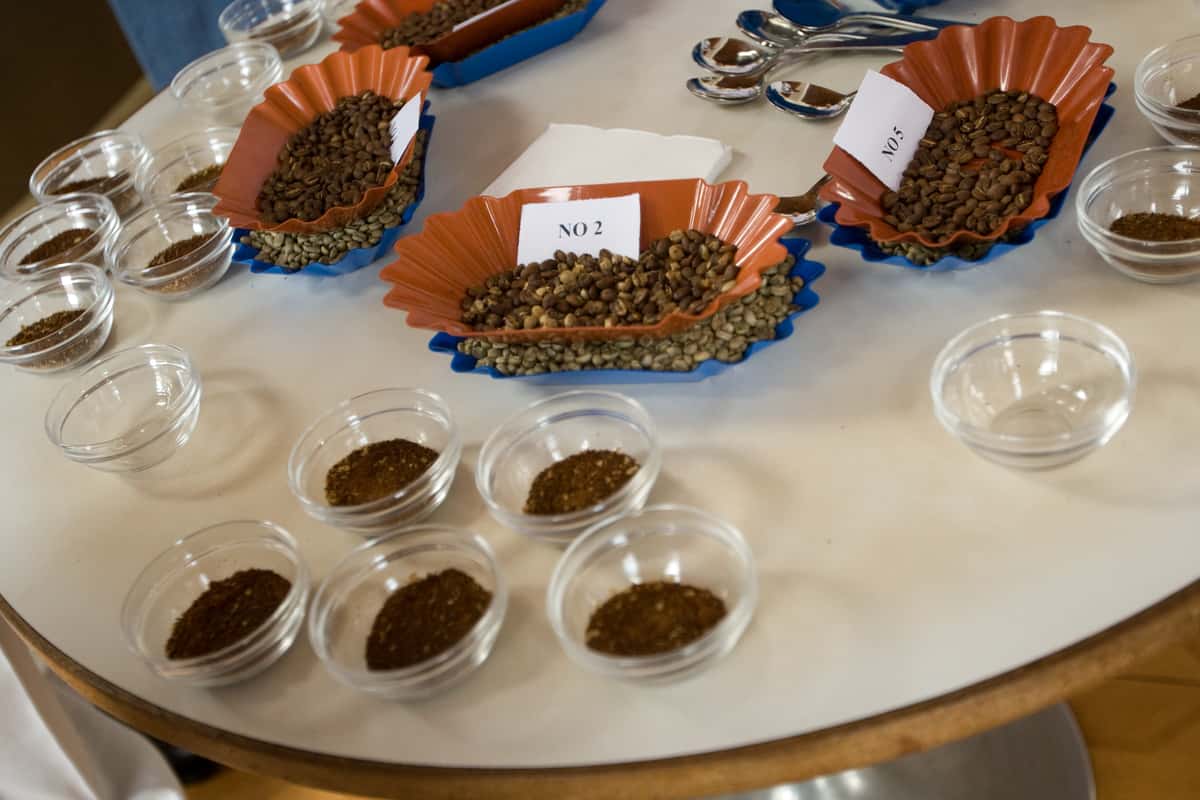
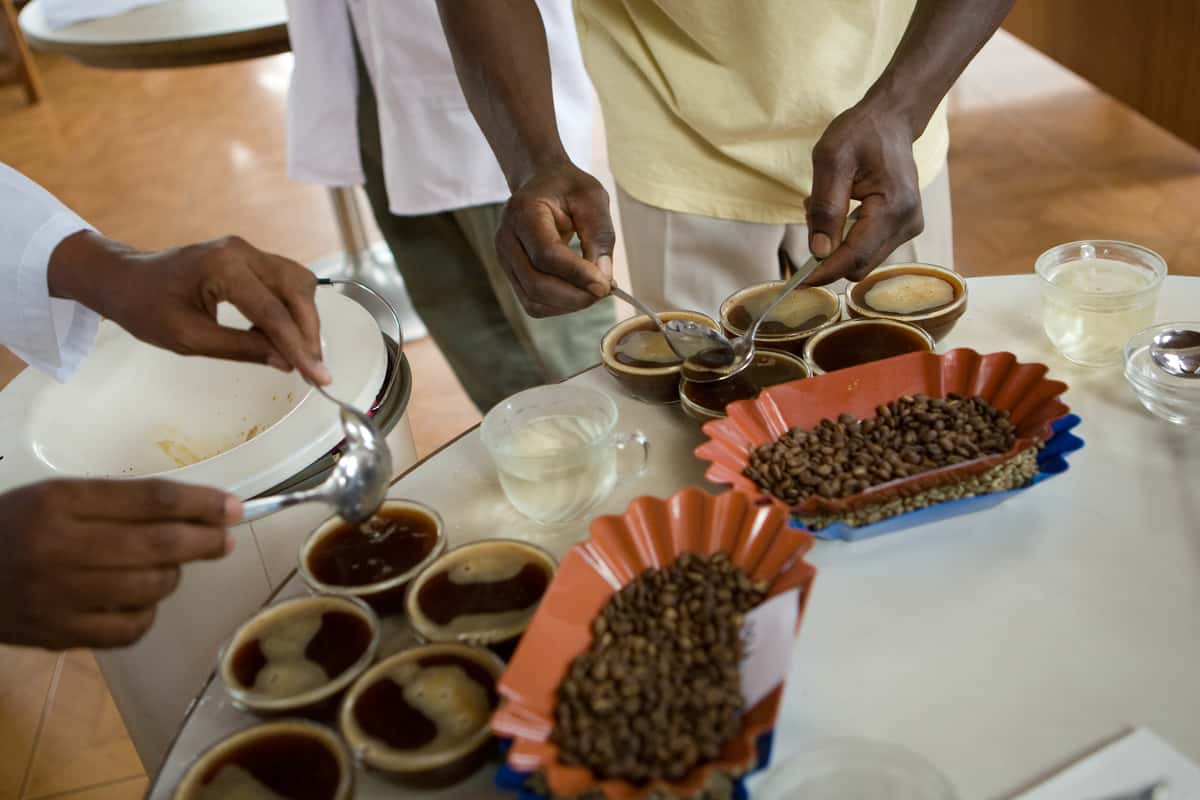
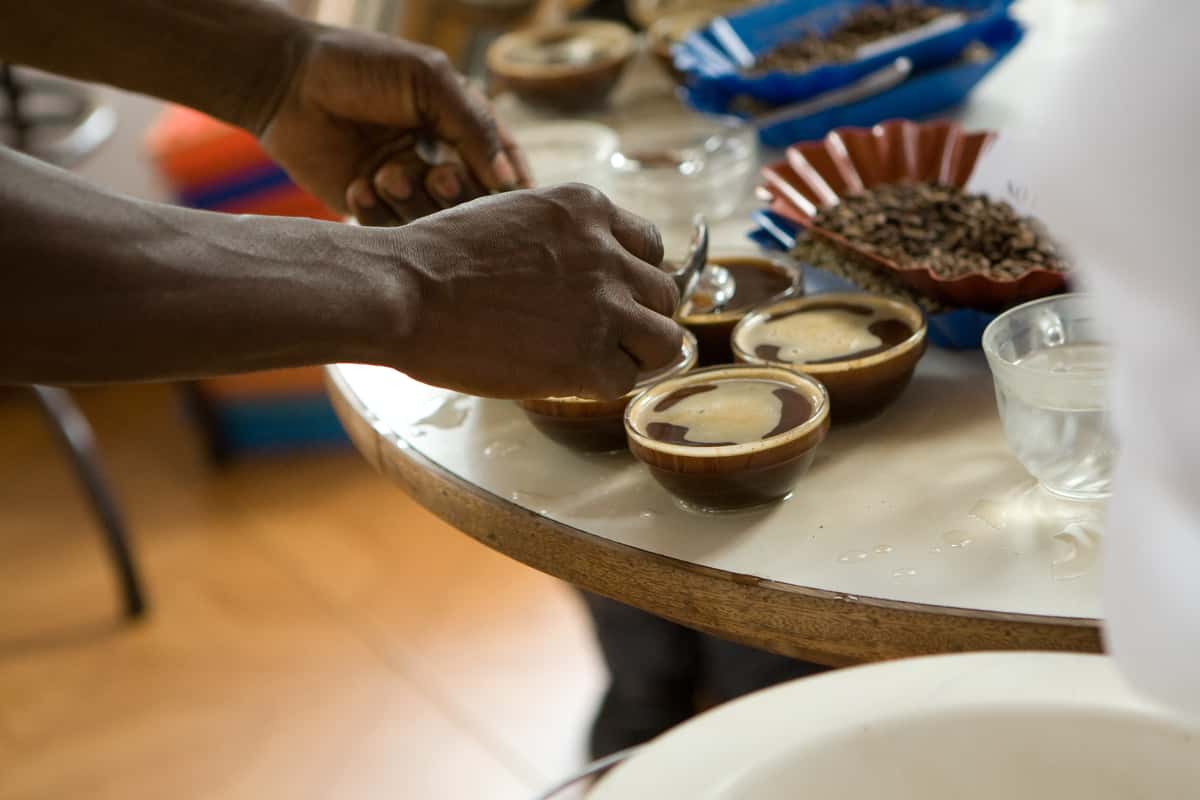
How coffee cupping is done:
Left: Coffee is ground coarsely into a small glass cup
Center: Almost boiling water is poured into the coffee to form a crust
Right: Cupper “breaks” the crust to smell the fragrance.
At times, up to two dozen coffees are cupped – starting by grinding each coffee very coarsely into a small glass cup and filling the cup with hot water just off the boiling point. The coffee grounds are allowed to steep like tea directly in the hot water until the grounds form a crust on the top surface.
Finally, the cupper “breaks” the crust with spoons and smells the first fragrance that emerges from the broken crust.
After evaluating the coffee’s aroma, the cupper cleans all of the grounds off the top of the cup and proceeds to taste the coffee by the spoonful – slurping it quickly and aerating the liquid by sucking in as much air as possible.
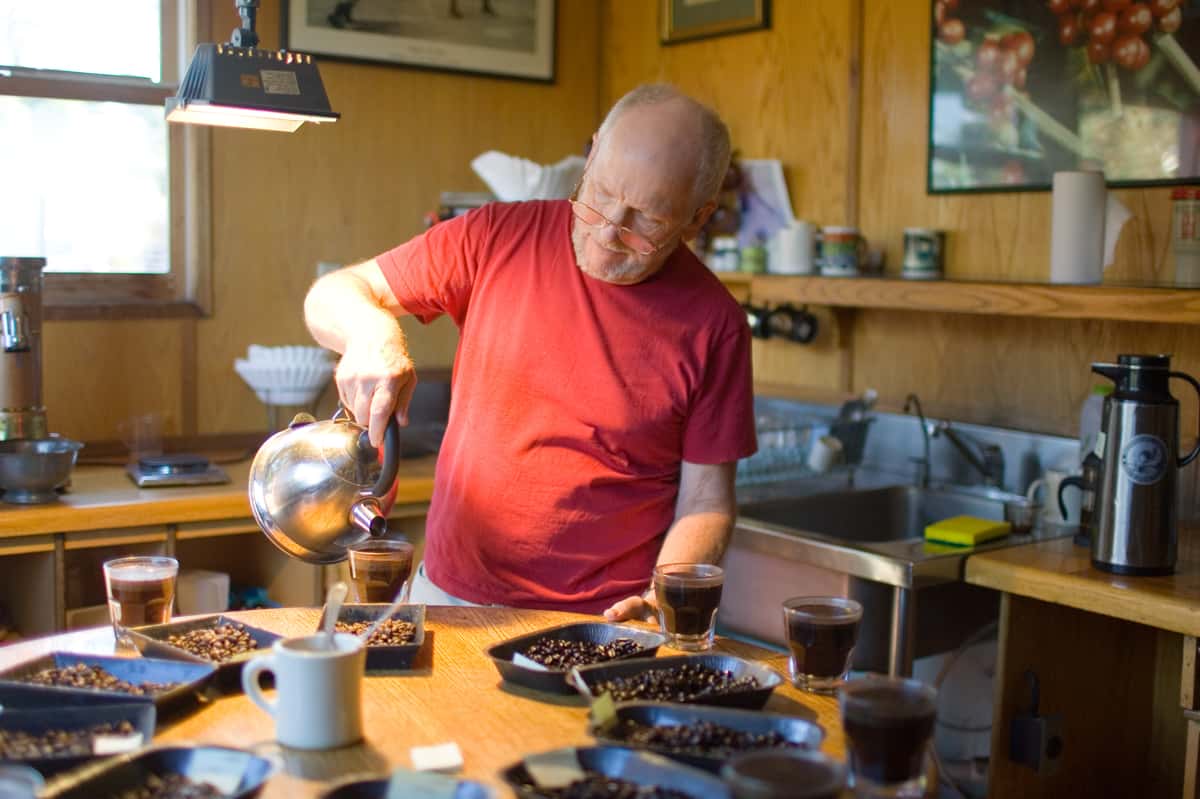
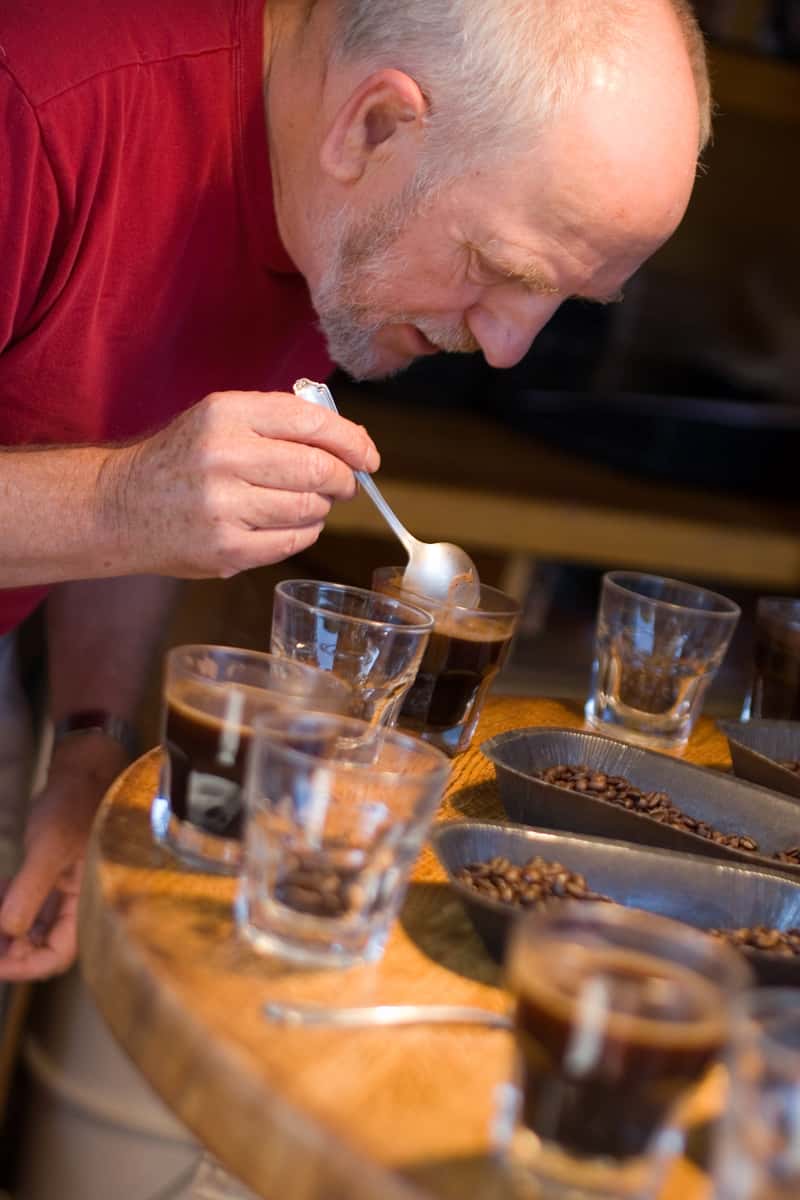
Team members follow, dipping their spoons and sipping noisily as they aerate and assess, then swallow or spit into bowls. Instead of “winespeak,” comments are kept simple. “Good.” “Lots of flavor.” “Citrusy.”
“We usually spit the coffee out since it is common to cup two dozen or more coffees in one cupping. This is the best way to evaluate the coffee’s characteristics such as aroma, color, body, acidity and origin flavors for decisions regarding roasting, blending, and purchasing,” Shallom explained.
Cupping is usually done on a daily basis to evaluate the quality of each production roast and for making purchasing decisions.
Larger group cuppings are done at least several times a month, especially when coffee farmers visit from Urth’s heirloom organic source farms.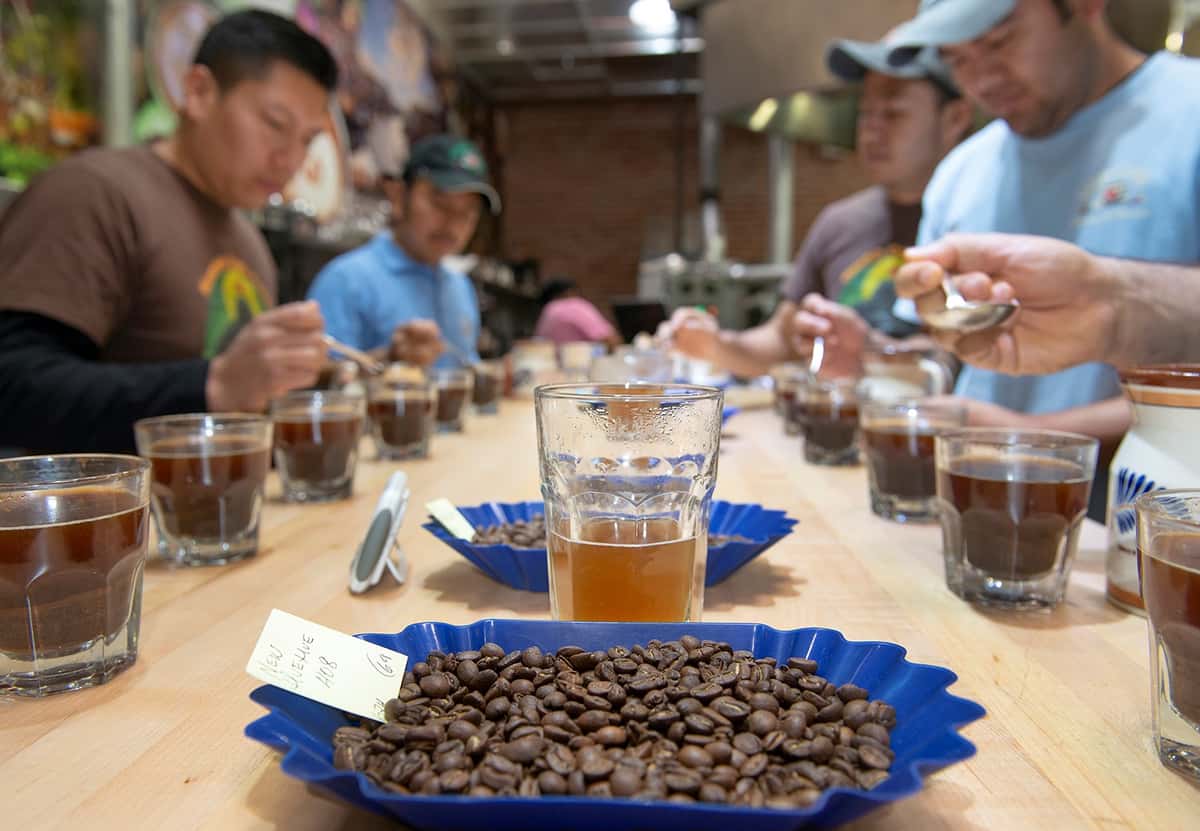
Recently, Gerald Mbabazi, Farmer Liaison, Mountain Gorilla Coffee Estate™, visited as did a representative of coffee farmers of the same Estate on the Congo side of the border. The estate is located on the border of Uganda, Congo and Rwanda.
Group cupping sessions occur when Urth receives “Cup of Excellence” coffee lots from specific countries that are available at auction. Recently, Urth received all the highest rated certified organically grown Peruvian coffees from the “Cup of Excellence.”
“We bid on several highly rated, certified organic Peruvian coffees, and we were the winning bidder!” Shallom said. “The ‘Cup of Excellence’ then introduced and connected us directly to the farms.”
The Discerning Taste of Jan Eno
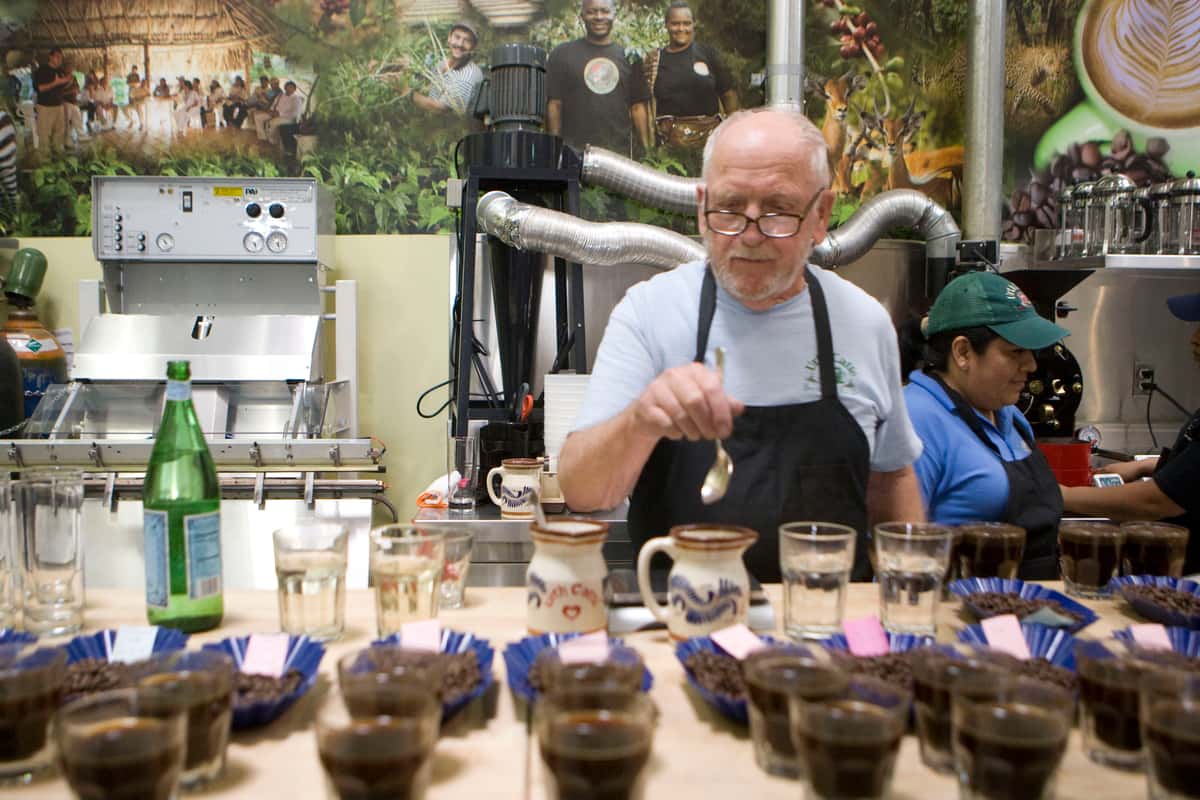
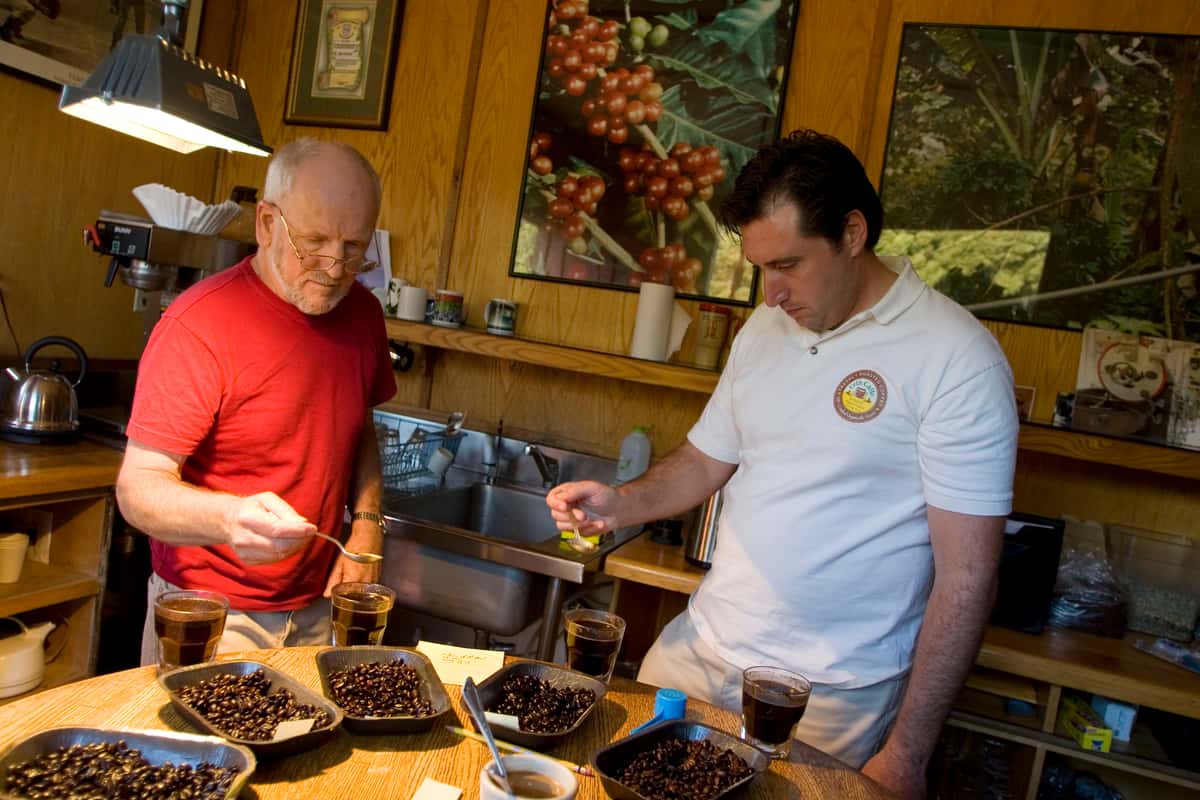
Shallom Berkman credits the expertise of Jan Eno, Urth’s Head Coffee Buyer, for developing Urth Caffé’s heirloom, organic coffees – including purchasing, roasting, blending and cupping.
Jan was working in Northern California about 30 years ago when he met Shallom Berkman. Before starting his coffee career, Jan worked at wineries, thus bringing wine tasting expertise to coffee.
“Jan has traveled all over the world with me to meet with heirloom, organic coffee farmers and has even traveled on behalf of Urth Caffé much more extensively and to other countries than I have,” Shallom said.
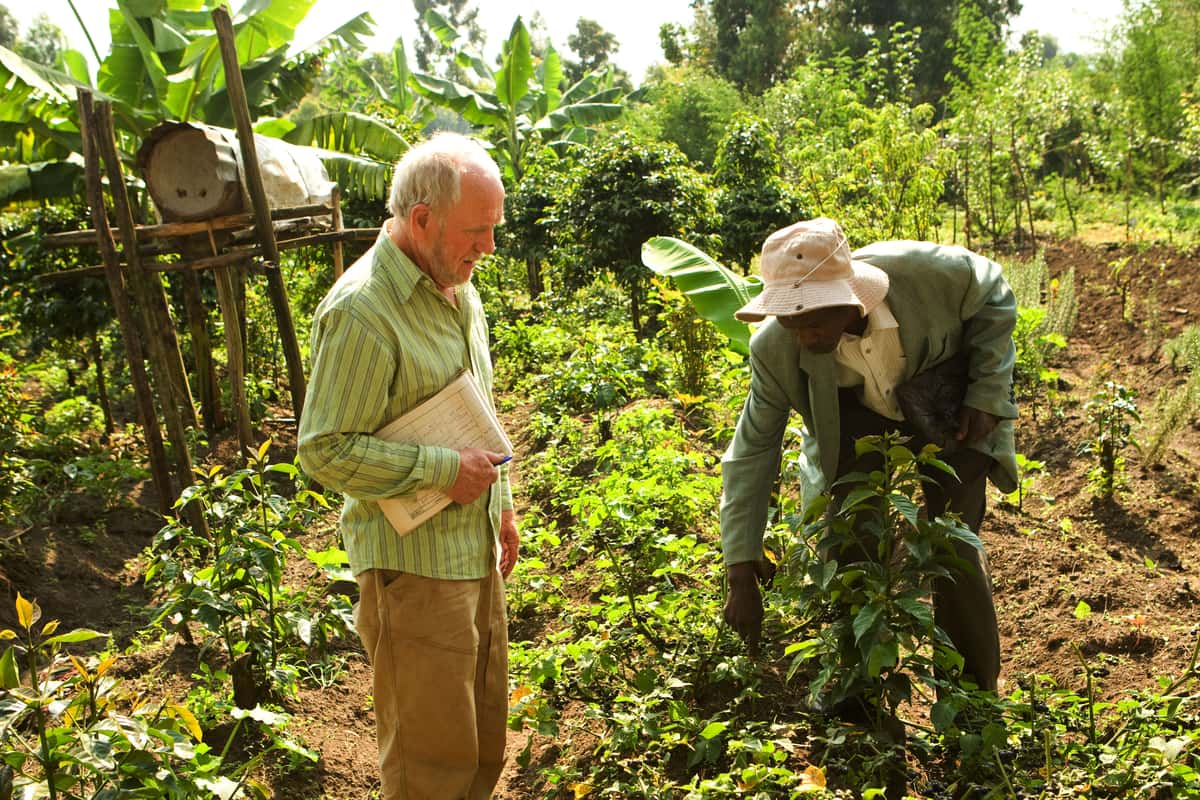
Jan Eno speaks with coffee farmer in Uganda.
“I think it would have to be the first trip we took to Uganda, which was really kind of amazing. We got to visit large animals (endangered Mountain Gorillas) and then to also visit and inspect small farmers in Uganda to see how they were doing, what they were doing,” Jan Eno explained.
Through the years, Shallom and Jan still visit heirloom, organic coffee farmers around the world.
“We were able to travel along the road toward organic farming together because when we first started buying organic coffee there was only one kind available,” Jan said. “Now there's every possible kind and it's been an eye-opening thing,” he continued.
Before COVID Jan traveled two weeks a month to all Southern California Urth Caffés to check the grind consistency, get samples, put them through a sieve shaker to analyze the particle size, then brew those coffees for cupping.